
 EN
EN
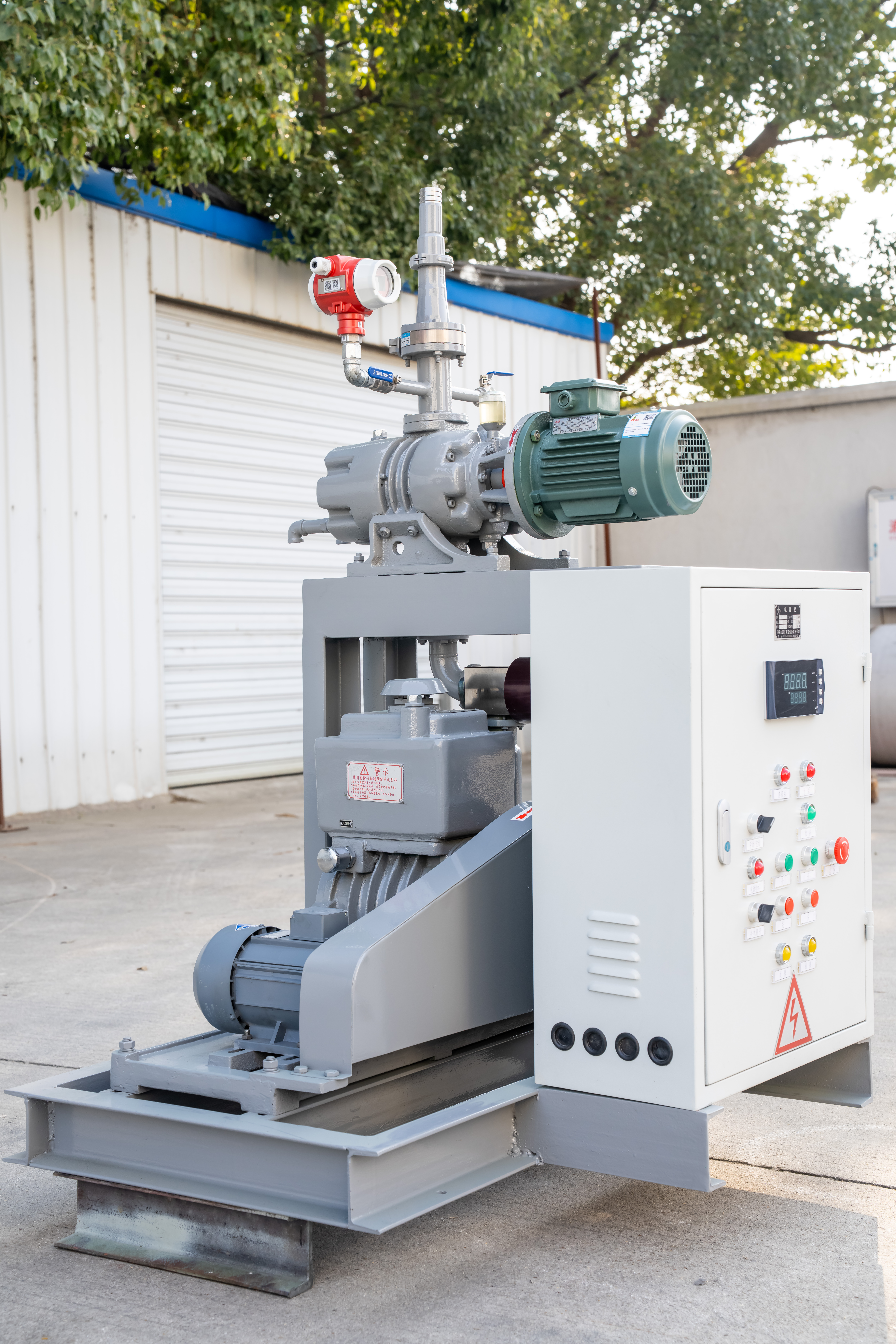
In demanding industrial environments, the reliability of vacuum units directly determines process uptime, product quality, and operational cost efficiency. Whether deployed in semiconductor fabrication, chemical processing, food packaging, or pharmaceutical manufacturing, these systems must perform consistently under continuous load, fluctuating process conditions, and stringent cleanliness standards. Understanding what design features separate a highly reliable vacuum unit from an average one is essential knowledge for any engineer, procurement specialist, or plant manager responsible for critical vacuum infrastructure.
Modern vacuum units have evolved considerably beyond simple pump-and-pipe assemblies. Today's most dependable systems integrate precision engineering, advanced materials science, intelligent monitoring, and thoughtful mechanical architecture into a unified design philosophy. This article explores the specific design features that meaningfully enhance reliability, helping decision-makers evaluate vacuum units with greater technical confidence and select systems built to last under real-world industrial conditions.
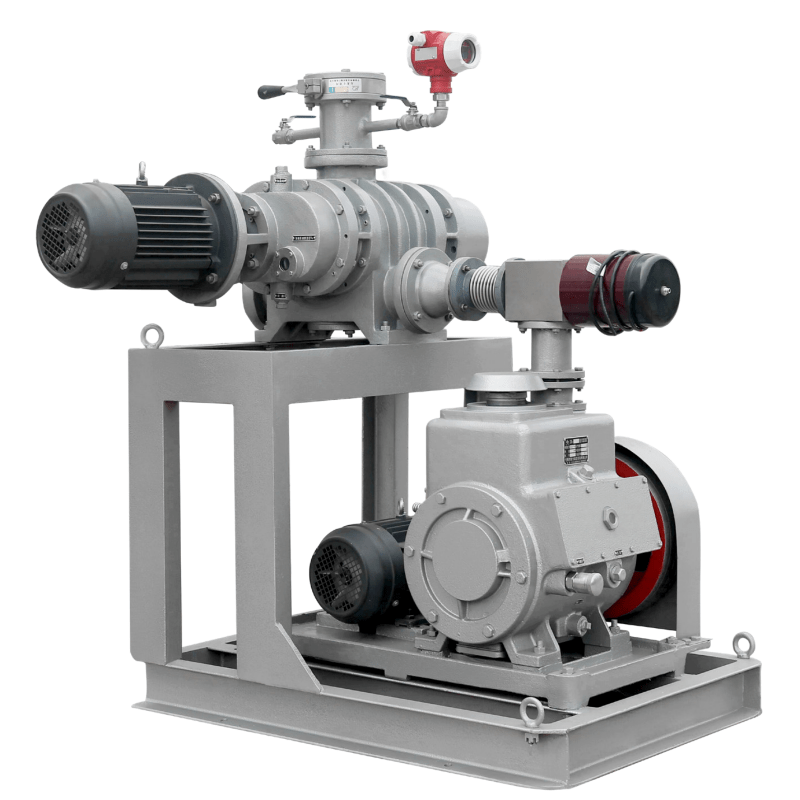
Mechanical Architecture and Structural Integrity
Robust Housing and Frame Design
The physical structure of vacuum units forms the foundation of long-term reliability. High-grade cast iron or precision-machined steel housings provide the dimensional stability needed to maintain tight clearances between rotating components over thousands of operating hours. When housing materials lack sufficient rigidity, thermal expansion and mechanical vibration can cause gradual misalignment, accelerating wear and eventually leading to premature failure.
Manufacturers who invest in close-tolerance machining during housing fabrication create vacuum units that maintain their designed operating clearances throughout the system's service life. This is particularly critical in Roots vacuum pump configurations where the small gap between rotor lobes and the pump casing must remain consistent to preserve pumping efficiency and prevent mechanical contact.
A well-designed frame also distributes vibration loads more evenly across mounting points, reducing fatigue stress on pipework connections and instrumentation attachments. This seemingly subtle detail plays a significant role in preventing downstream maintenance issues that can compound over time in continuously operating facilities.
Precision Rotor and Shaft Engineering
The rotors and shafts inside vacuum units are among the most mechanically stressed components in the entire system. Precision balancing of rotating assemblies is not optional — it is a fundamental reliability requirement. Dynamically balanced rotors minimize bearing loads, reduce vibration transmission to surrounding structures, and extend lubrication intervals by preventing localized stress concentrations in bearing raceways.
High-quality vacuum units use shafts manufactured from alloy steels with defined hardness profiles, ensuring that contact surfaces resist both abrasive wear and fatigue cracking under cyclic stress. The precision with which shaft journals are ground and polished directly influences how effectively seal faces and bearings can maintain their designed contact geometry over time.
In multi-stage vacuum units combining Roots boosters with rotary vane backing pumps, the mechanical integrity of each shaft within the assembly must be engineered in coordination. Mismatched shaft stiffness between stages can create resonance conditions that prematurely fatigue coupling elements and create alignment drift under thermal loading.
Sealing Systems and Contamination Prevention
Advanced Shaft Seal Technology
Shaft seals are among the most reliability-critical components in vacuum units because they serve a dual purpose: preventing atmospheric leakage into the vacuum chamber and preventing process gases or lubricants from migrating where they are not wanted. Poor seal design is one of the leading causes of vacuum unit failure in industrial settings, making this a key area where design quality separates reliable systems from unreliable ones.
Modern vacuum units employ a range of shaft sealing strategies depending on process requirements. Labyrinth seals, mechanical face seals, lip seals, and ferrofluidic seals each offer different trade-offs between leak rate, tolerance of contaminated process gases, and maintenance interval. Reliable vacuum units are designed with seals that match the actual process environment rather than relying on generic solutions that may perform adequately under ideal conditions but fail rapidly when exposed to real process variability.
The best vacuum units also incorporate purge gas capabilities around critical shaft seal zones, allowing a controlled inert gas flow to protect seal faces from reactive or particulate-laden process streams. This design feature meaningfully extends seal life in chemically aggressive applications without requiring frequent intervention.
Internal Gas Path Design and Particulate Management
Within the pump body of vacuum units, the geometry of internal gas flow paths determines how well the system handles process-generated particulates, condensable vapors, and reactive byproducts. Poorly designed internal passages allow particulates to accumulate in low-velocity zones, creating abrasive deposits that score precision surfaces over time.
Reliable vacuum units are engineered with smooth, sweeping internal passages that minimize stagnation zones and encourage particulate transport toward the outlet. In applications involving condensable vapors, internal heating of pump bodies — particularly in rotary vane sections — prevents condensation from diluting lubricants and causing corrosive damage to precision surfaces.
Gas ballast features, which admit a controlled volume of atmospheric air into the compression stage, are a well-established design tool for managing condensate in vacuum units handling vapor-laden streams. Systems with well-engineered gas ballast valves that allow operator adjustment provide significantly more operational flexibility and reliability than fixed or absent ballast provisions.
Thermal Management and Cooling Systems
Integrated Cooling Circuit Design
Heat management is a critical but sometimes overlooked factor in the reliability of vacuum units. Compression work generates significant heat, and if that heat is not effectively removed, lubricant degradation accelerates, dimensional clearances shift, and seal materials age prematurely. Reliable vacuum units incorporate integrated cooling circuits designed to maintain consistent operating temperatures across a defined range of ambient and process conditions.
Water-cooled vacuum units offer excellent thermal stability for high-throughput or continuous-duty applications where air cooling alone cannot maintain acceptable temperature levels. The cooling jacket design must promote uniform heat extraction across the pump body to prevent thermal gradients that can cause distortion of precision components. Systems with poorly designed cooling circuits may show acceptable bulk temperatures while still developing localized hot spots that initiate failure.
Air-cooled vacuum units are widely used for their simplicity and installation flexibility, but their reliability depends heavily on the efficiency of fin geometry, airflow ducting, and fan sizing. Undersized cooling in air-cooled designs is a common source of premature wear, particularly in facilities where ambient temperatures are higher than assumed at the system design stage.
Lubrication System Reliability
For vacuum units that rely on oil lubrication — including both Roots pump gearboxes and rotary vane backing pump stages — the lubrication system design is directly linked to overall system reliability. Splash lubrication is adequate for many configurations, but higher-speed or higher-load applications benefit from pressure-fed lubrication circuits that guarantee oil delivery to all critical surfaces regardless of pump orientation or dynamic conditions.
Oil sight glasses, oil mist eliminators, and oil return systems in the exhaust path are all design details that influence how well vacuum units maintain proper lubrication over extended service intervals. Systems designed with accessible oil fill and drain ports also reduce the risk of incorrect maintenance procedures that can introduce contamination or result in improper oil levels.
Selecting the correct lubricant viscosity grade for the operating temperature range is as important as the mechanical design of the lubrication circuit. The best vacuum units are documented with clear lubricant specifications and oil change intervals calibrated to actual operating conditions rather than generic conservative recommendations that discourage compliance.
Monitoring, Control, and Condition Intelligence
Integrated Sensor Architecture
Reliability in modern vacuum units increasingly depends not only on mechanical design quality but also on the intelligence built into the monitoring and control architecture. Systems equipped with integrated sensors for temperature, vibration, inlet pressure, and outlet pressure provide the operational visibility needed to detect developing faults before they escalate into catastrophic failures.
Vibration monitoring is particularly valuable in vacuum units because changes in vibration signature often provide early warning of bearing wear, rotor imbalance, or cavitation conditions that will worsen progressively if unaddressed. Vacuum units designed with accessible vibration sensor mounting points allow maintenance teams to establish baseline signatures and trend data over time, enabling condition-based maintenance strategies that dramatically reduce unplanned downtime.
Temperature monitoring at multiple points — inlet gas temperature, oil temperature, motor winding temperature, and bearing temperature — provides a comprehensive thermal health picture that catches problems at their earliest stages. Vacuum units that expose only a single temperature reading sacrifice diagnostic resolution that experienced maintenance engineers rely upon for accurate fault characterization.
Protective Control Logic and Interlock Design
Beyond monitoring, the control logic embedded in vacuum units plays a critical role in preventing reliability-damaging operating conditions. Properly designed interlock sequences ensure that Roots booster stages only start after the backing pump has established sufficient fore-vacuum, preventing the booster from operating against excessive differential pressure that can cause overheating or mechanical overload.
Soft-start motor control reduces inrush current stress on motor windings and minimizes mechanical shock on couplings and gear trains during startup, meaningfully extending the service life of these components in vacuum units that start and stop frequently. Systems designed with variable frequency drives on their main motor stages can also adjust pumping speed to match actual process demand, reducing thermal and mechanical stress during low-load periods.
Comprehensive alarm and shutdown logic that responds appropriately to over-temperature, over-pressure, loss of cooling water, and oil level alarms protects vacuum units from the conditions most likely to cause irreparable damage. The design quality of these protective systems is as important as the mechanical engineering of the pump itself.
Maintainability as a Reliability Design Feature
Accessibility and Modular Component Design
Reliability is not only a function of how long vacuum units run without intervention — it also includes how quickly and correctly maintenance can be completed when intervention is required. Systems designed with maintenance accessibility as a first-order priority significantly outperform systems that require extensive disassembly to reach serviceable components.
Modular component designs that allow bearing cartridges, seal assemblies, and vane sets to be replaced without full pump disassembly dramatically reduce mean time to repair. In industrial environments where vacuum units support continuous processes, the ability to complete routine maintenance within a planned production window is as valuable as the initial mean time between failures.
Clear service documentation, standardized fastener sizes, and logical component access sequencing all contribute to maintenance quality. When service procedures are unnecessarily complex or underdocumented, the risk of incorrect reassembly introducing new failure modes rises significantly — turning a routine maintenance event into a reliability problem.
Corrosion Protection and Surface Treatment
In industrial environments, vacuum units are frequently exposed to moisture, process gas condensates, and cleaning agents that can initiate corrosion on both internal and external surfaces. Internal surface treatments — including hard anodizing on aluminum components, nickel plating on cast iron surfaces, and PTFE coatings in chemically aggressive zones — dramatically extend the service life of vacuum units operating in corrosive service.
External corrosion protection through high-quality primer and topcoat systems protects structural components from environmental degradation that, over years of service, can compromise the mechanical integrity of housings and mounting structures. Vacuum units intended for outdoor or high-humidity installations require additional corrosion protection specifications that should be explicitly addressed in the system design.
Material selection for O-rings, gaskets, and flexible connections must also be coordinated with the expected chemical environment. Elastomers that swell, harden, or chemically degrade in contact with process gases introduce leak paths that compromise both vacuum performance and system safety. Reliable vacuum units are designed with elastomer specifications clearly matched to documented process compatibility data.
FAQ
What is the most important design feature for reliability in vacuum units?
There is no single most important feature — reliability in vacuum units results from the integration of multiple well-engineered systems. However, precision mechanical tolerances, effective sealing, proper thermal management, and intelligent monitoring together form the core of a reliable design. Weakness in any one area can undermine the performance of the others, which is why system-level design quality matters more than any single component specification.
How does the combination of Roots boosters with rotary vane backing pumps affect reliability?
When vacuum units combine Roots boosters with rotary vane backing pumps, reliability depends heavily on how well the two stages are matched in terms of throughput capacity, control logic, and thermal characteristics. Properly matched multi-stage vacuum units achieve deep vacuum levels efficiently while distributing load across stages in a way that prevents any individual stage from operating beyond its design envelope. Poor matching creates back-pressure conditions that accelerate wear and reduce service life.
How often should vacuum units be serviced to maintain reliability?
Service intervals for vacuum units vary by design type, operating conditions, and process environment. Oil-sealed rotary vane stages typically require oil changes every 2,000 to 4,000 operating hours under clean process conditions, with shorter intervals for chemically contaminated service. Roots booster stages require periodic gear oil inspection and bearing condition assessment. Condition-based monitoring using vibration and temperature trends allows maintenance intervals to be optimized for actual operating conditions rather than fixed calendar schedules.
Can design features compensate for harsh operating environments in vacuum units?
Good design can significantly extend the reliable service life of vacuum units in harsh environments, but it cannot entirely compensate for conditions that exceed the system's rated operating envelope. Features such as corrosion-resistant coatings, chemically compatible elastomers, purged shaft seals, and gas ballast systems substantially improve resilience in demanding applications. However, correct process characterization at the system selection stage remains essential — design features are most effective when paired with accurate matching of system capabilities to actual process demands.
Table of Contents
- Mechanical Architecture and Structural Integrity
- Sealing Systems and Contamination Prevention
- Thermal Management and Cooling Systems
- Monitoring, Control, and Condition Intelligence
- Maintainability as a Reliability Design Feature
-
FAQ
- What is the most important design feature for reliability in vacuum units?
- How does the combination of Roots boosters with rotary vane backing pumps affect reliability?
- How often should vacuum units be serviced to maintain reliability?
- Can design features compensate for harsh operating environments in vacuum units?
