
 EN
EN
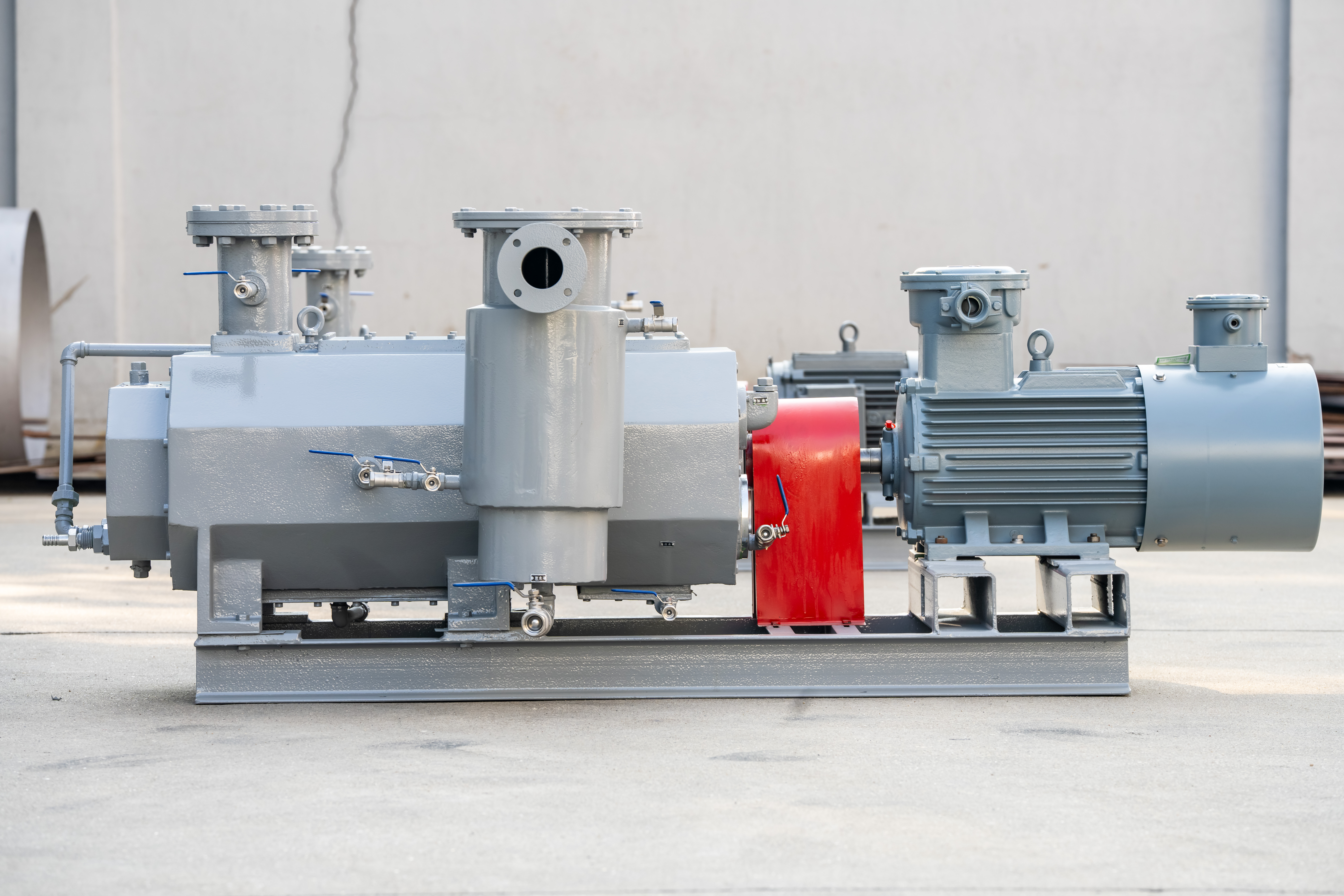
When industrial processes involve corrosive gases, selecting the right vacuum equipment becomes a critical engineering decision. A water ring vacuum pump stands out as one of the most reliable and widely adopted solutions in these demanding environments. Unlike dry-running or oil-sealed alternatives, this technology uses a liquid ring — typically water — as its working medium, creating a natural barrier between the pump's mechanical components and the aggressive gases being handled. This fundamental design principle is precisely what makes it so effective when corrosive media are present.
The effectiveness of the water ring vacuum pump for corrosive gas applications goes beyond simple mechanical protection. It encompasses the pump's isothermal compression characteristics, its ability to handle gas-liquid mixtures, and its compatibility with a wide range of corrosion-resistant materials. Industries such as chemical processing, pharmaceuticals, petrochemicals, and paper manufacturing rely heavily on this technology precisely because it maintains operational integrity even when the process stream contains acids, solvents, chlorinated compounds, or other chemically aggressive substances. Understanding the reasons behind this effectiveness helps engineers and procurement specialists make more informed equipment decisions.
The Core Mechanism That Protects Against Corrosive Gas
How the Liquid Ring Creates a Protective Buffer
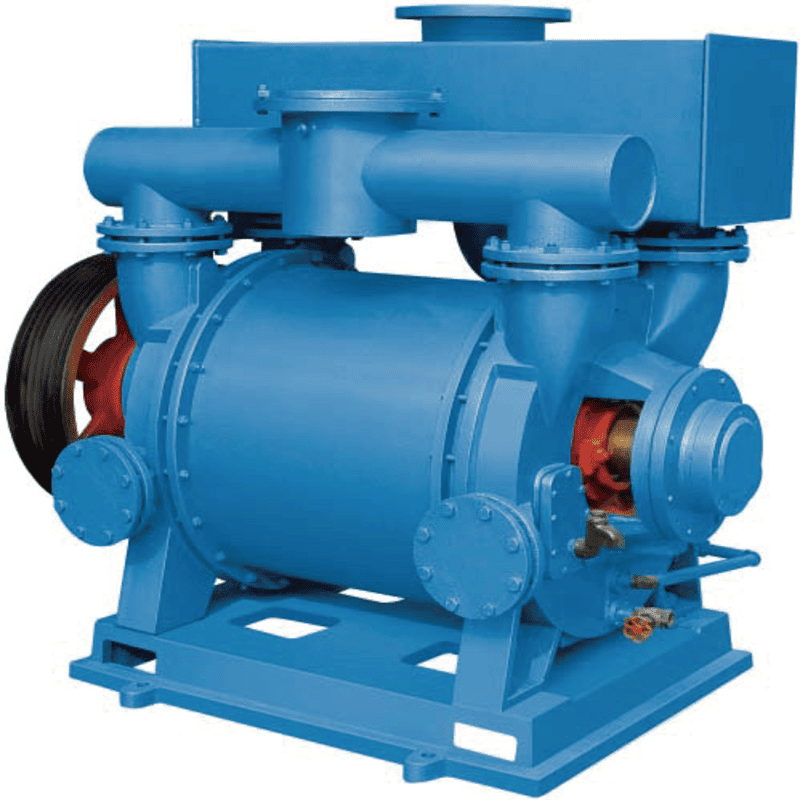
The operating principle of a water ring vacuum pump is elegantly simple and inherently protective. As the eccentrically mounted impeller rotates within the cylindrical casing, the liquid — usually water or a compatible chemical — is flung outward by centrifugal force, forming a rotating ring against the inner casing wall. This liquid ring creates a series of variable-volume compression chambers between the impeller blades and the liquid surface. Gas enters through the inlet port, gets trapped in these chambers, is compressed as the chamber volume decreases, and is then discharged through the outlet.
The critical point for corrosive gas handling is that at no stage does the gas come into direct, sustained contact with the pump's moving metal parts. The liquid ring acts as a continuous sealing and absorbing medium. When corrosive gases enter the compression cycle, they are immediately surrounded by the liquid medium, which can neutralize, dilute, or carry away reactive compounds before they have a chance to attack the impeller or casing surfaces. This is a fundamentally different and far more protective arrangement than mechanical dry pumps where metal surfaces are fully exposed to the process gas throughout the entire compression stroke.
Furthermore, the water ring vacuum pump operates under near-isothermal compression conditions. Because the liquid ring continuously absorbs compression heat, gas temperatures within the pump remain relatively low. This is particularly significant for corrosive gases because elevated temperatures typically accelerate chemical attack on metal surfaces. By keeping the gas cool throughout the compression process, the pump inherently reduces the thermodynamic driving force for corrosive reactions inside the machine.
Isothermal Compression and Its Role in Chemical Safety
Isothermal compression is not merely an efficiency characteristic — for corrosive gas applications, it is a safety and longevity feature. Many corrosive gases become far more reactive at elevated temperatures. Hydrogen chloride, sulfur dioxide, and various organic acid vapors, for example, exhibit significantly higher corrosion rates against metallic surfaces when temperature rises. A water ring vacuum pump inherently suppresses this temperature rise because the liquid ring continuously absorbs heat generated during compression.
This thermal management function means that the pump does not create the elevated-temperature conditions that would accelerate chemical degradation. Competing pump technologies, including rotary vane or screw-type dry vacuum pumps, can generate significant heat during compression, which not only worsens corrosive attack but may also lead to thermal decomposition of certain process gases, creating secondary hazardous byproducts. The water ring vacuum pump avoids this problem by design, making it inherently safer for chemical process environments.
The liquid also acts as a continuous purging medium. As fresh liquid is introduced to maintain the ring, reaction products and dissolved corrosive compounds are continuously removed from the compression zone and carried out with the discharge stream. This self-cleaning characteristic prevents the buildup of corrosive residues inside the pump, which could otherwise cause localized pitting, crevice corrosion, or blockages over time.
Material Selection and Construction for Corrosive Environments
Matching Pump Materials to Specific Corrosive Media
While the operating principle of the water ring vacuum pump already provides inherent protection against corrosive gases, the selection of construction materials takes this protection to the next level. Modern water ring vacuum pumps designed for corrosive service are available in a range of materials specifically chosen to resist chemical attack from the target gas streams. Cast iron is suitable for mild corrosive conditions, but for more aggressive media, stainless steel grades such as 316L or duplex stainless are common choices.
For extremely aggressive environments involving strong acids such as hydrochloric or hydrofluoric acid, pump manufacturers offer casings and impellers made from high-alloy materials, fiber-reinforced plastics, or even titanium. The water ring vacuum pump architecture is particularly amenable to these material upgrades because the design is relatively straightforward — the main wetted components are the casing, impeller, and shaft seal, and each of these can be independently specified in corrosion-resistant materials without fundamentally altering the machine's operating principle.
Shaft seals in corrosive service water ring vacuum pump applications deserve special attention. Mechanical seals with corrosion-resistant face materials such as silicon carbide or ceramic are typically employed, along with chemically compatible elastomers for the secondary sealing elements. Proper seal selection prevents leakage of corrosive gases into the atmosphere, protecting both equipment longevity and workplace safety.
The Role of the Sealant Liquid in Corrosion Management
One of the most flexible and underappreciated features of the water ring vacuum pump is that the working liquid does not have to be plain water. In corrosive gas applications, the choice of sealant liquid is a powerful engineering variable. For acidic gas streams, operators may use a buffered or alkaline solution to neutralize absorbed acid vapors directly within the pump. For solvent-laden gas streams, a compatible organic liquid that does not react adversely with the process gas can serve as the ring liquid.
This flexibility means that the water ring vacuum pump can be chemically tuned to each specific corrosive application. By choosing a sealant liquid with a higher chemical affinity for the corrosive gas, absorption efficiency is enhanced, further reducing the concentration of corrosive species that reach the pump's metal surfaces. This is a capability that no dry vacuum pump technology can replicate, because those machines rely solely on material resistance rather than active chemical management within the compression zone.
Closed-loop liquid circulation systems are often paired with water ring vacuum pump installations in corrosive service. In these configurations, the sealant liquid is continuously recirculated through a heat exchanger to remove absorbed heat and through a treatment unit to remove dissolved corrosive compounds before re-entering the pump. This arrangement extends liquid life, reduces effluent disposal costs, and maintains consistent pump performance over long operational periods.
Practical Applications Where the Water Ring Vacuum Pump Excels
Chemical and Petrochemical Processing
The chemical and petrochemical industries represent the largest application domain for the water ring vacuum pump in corrosive service. Processes such as vacuum distillation, evaporation, degassing, and solvent recovery routinely generate gas streams containing acid vapors, chlorinated compounds, or reactive organic species. The water ring vacuum pump handles these streams without the risk of catastrophic internal corrosion that would quickly destroy dry mechanical pumps.
In chlorine and hydrochloric acid production facilities, for instance, a water ring vacuum pump constructed in stainless steel or titanium, operating with a dilute acid or water sealant, can sustain continuous operation for years despite constant exposure to highly corrosive gas phases. The pump's ability to handle gas-liquid mixtures also makes it tolerant of carryover droplets from upstream processes — a common occurrence in chemical plants that would cause severe damage to rotor-type dry pumps.
Pharmaceutical manufacturing uses the water ring vacuum pump extensively in solvent evaporation and drying operations, where the process gas stream may contain ethanol, acetone, methylene chloride, or other reactive solvents. The liquid ring safely absorbs and carries away these vapors, preventing their accumulation to flammable or explosive concentrations inside the pump casing — a safety advantage that is particularly valued in pharmaceutical plant environments.
Pulp and Paper and Other Industrial Sectors
The pulp and paper industry relies on the water ring vacuum pump for paper machine vacuum systems, where the gas stream is laden with hot, humid air mixed with fiber particles and occasional chemical carryover from process waters. While not as aggressively corrosive as chemical plant streams, these conditions are still incompatible with dry vacuum technology and are handled reliably by the liquid ring mechanism.
In the food and beverage sector, water ring vacuum pump units handle steam-laden gas in evaporation systems, where the combination of hot water vapor and organic acids requires a pump that is both corrosion-tolerant and hygienic in design. Stainless steel construction combined with the inherent washing action of the liquid ring makes this technology a natural fit for food-grade vacuum applications.
Power generation facilities use the water ring vacuum pump in steam condenser vacuum systems, where the pump must handle non-condensable gases mixed with steam without suffering corrosive attack from carbonic acid or oxygen dissolved in the condensate. The robust simplicity of the design, combined with the thermal buffering provided by the liquid ring, ensures reliable long-term service in these high-availability environments.
Operational Advantages That Reinforce Long-Term Reliability
Resistance to Slug Flow and Liquid Carryover
One of the most practical reasons why the water ring vacuum pump is preferred for corrosive gas service is its inherent tolerance for slug flow and liquid carryover. In industrial processes, gas streams are rarely perfectly dry. Droplets, aerosols, and even small slugs of liquid may enter the pump inlet alongside the corrosive gas. Most positive-displacement vacuum pump designs would suffer immediate mechanical damage from liquid slugging because incompressible liquid cannot be compressed without destroying the pump's internal geometry.
The water ring vacuum pump handles this situation gracefully. Since the working medium is already liquid, additional liquid entering the compression zone is simply absorbed into the ring without causing hydraulic shock. This tolerance for wet gas and carryover conditions is especially important in chemical plants where upstream vessels may surge or where condensation can form in inlet pipework during transient operating conditions. It translates directly into reduced downtime and lower maintenance costs compared to alternative technologies.
Simplicity, Reliability, and Low Maintenance Demand
The mechanical simplicity of the water ring vacuum pump is another important factor in its effectiveness for corrosive service. The pump has very few moving parts — essentially just the impeller on a shaft — with no internal valves, pistons, or close-clearance rotors. This simplicity means there are fewer components that can be attacked by corrosive gases, fewer failure modes, and fewer maintenance interventions required over the pump's service life.
Maintenance requirements for a water ring vacuum pump in corrosive service are primarily limited to periodic inspection of mechanical seals, bearing replacement at scheduled intervals, and management of the sealant liquid quality. There is no need to service internal valves or replace oil charges as with oil-sealed pumps. This straightforward maintenance profile reduces the risk of exposing maintenance personnel to corrosive residues inside the pump casing — a significant safety benefit in chemical plant environments.
The proven track record of the water ring vacuum pump across decades of industrial service in corrosive environments also provides procurement and maintenance teams with a rich base of operational experience, spare parts availability, and engineering knowledge. This maturity as a technology reduces project risk and supports confident long-term lifecycle planning for capital-intensive industrial installations.
FAQ
Why is a water ring vacuum pump better than a dry pump for corrosive gases?
A water ring vacuum pump uses a liquid ring as the compression medium, which physically separates corrosive gases from the pump's metal surfaces and continuously absorbs and removes reactive species. Dry pumps expose their internal metal surfaces directly to the process gas throughout the compression cycle, making them far more vulnerable to chemical attack. Additionally, the isothermal compression in a water ring vacuum pump keeps temperatures low, reducing the rate of corrosive reactions inside the machine.
What sealant liquids can be used instead of water in corrosive applications?
The sealant liquid in a water ring vacuum pump can be replaced with various chemical solutions depending on the application. Dilute caustic solutions are used for acidic gas streams, organic solvents compatible with process chemistry are used in pharmaceutical applications, and glycol-water mixtures are used where freezing is a concern. The key is selecting a liquid that is chemically compatible with both the process gas and the pump construction materials while providing adequate vapor pressure characteristics for the desired vacuum level.
What materials are recommended for a water ring vacuum pump handling strong acid gases?
For strong acid gas service, a water ring vacuum pump constructed in 316L stainless steel is suitable for many common acids. Duplex stainless steel offers improved resistance for more aggressive chloride-containing environments. Titanium is the preferred choice for hydrochloric acid or oxidizing acid service. Fiber-reinforced plastic or lined constructions are also used where extreme corrosion resistance is required and mechanical loads permit. Shaft seals should use silicon carbide or ceramic faces with chemically resistant elastomers.
Does a water ring vacuum pump require special installation considerations for corrosive service?
Yes, several installation factors are important for corrosive service. The sealant liquid supply and discharge system should be constructed in compatible materials, and a closed-loop circulation system with heat exchange and liquid treatment is typically recommended to manage absorbed corrosive compounds. Inlet pipework should be designed to prevent condensate accumulation, and adequate drainage connections should be provided at low points. Ventilation and containment measures around the pump should account for the hazardous nature of the process gas in case of seal leakage.
Table of Contents
- The Core Mechanism That Protects Against Corrosive Gas
- Material Selection and Construction for Corrosive Environments
- Practical Applications Where the Water Ring Vacuum Pump Excels
- Operational Advantages That Reinforce Long-Term Reliability
-
FAQ
- Why is a water ring vacuum pump better than a dry pump for corrosive gases?
- What sealant liquids can be used instead of water in corrosive applications?
- What materials are recommended for a water ring vacuum pump handling strong acid gases?
- Does a water ring vacuum pump require special installation considerations for corrosive service?