
 EN
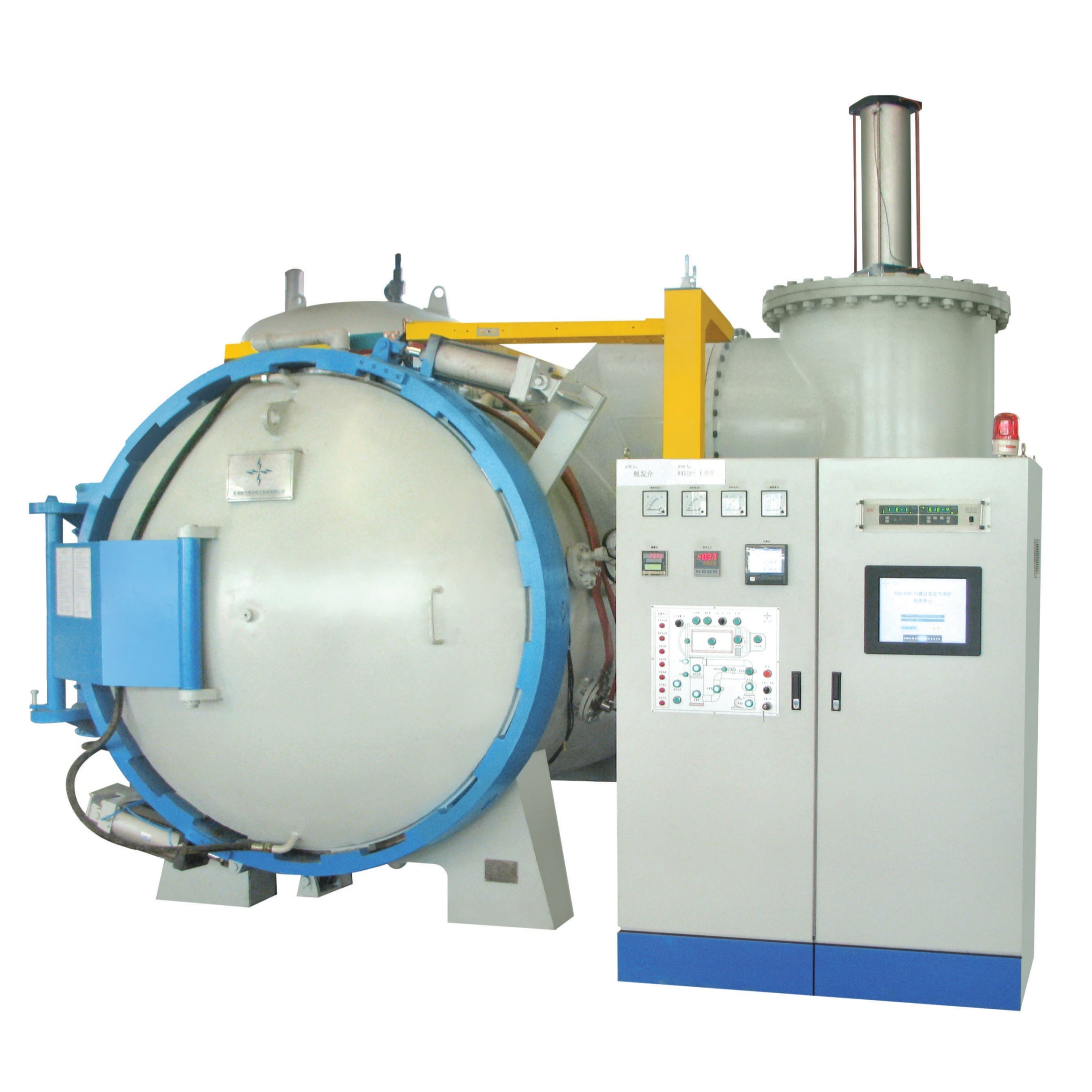
The vacuum gas quenching furnace represents a critical advancement in industrial heat treatment, enabling manufacturers to achieve cooling rates that conventional methods cannot match. Understanding how a vacuum gas quenching furnace achieves these fast cooling rates requires examining the fundamental mechanisms that distinguish this technology from traditional quenching approaches. The vacuum gas quenching furnace operates by combining controlled atmospheric conditions with precision gas flow management, resulting in superior metal hardening and reduced distortion that directly impacts part quality and manufacturing efficiency.
Fast cooling rates in a vacuum gas quenching furnace stem from a carefully orchestrated interplay of pressure dynamics, thermal management, and inert gas circulation. When components are heated to precise temperatures within a vacuum gas quenching furnace, the cooling phase begins with controlled introduction of inert gas, typically nitrogen or argon, at elevated pressures. This creates a highly efficient heat transfer environment where the vacuum gas quenching furnace maintains superior cooling uniformity across complex geometries, preventing the surface hardening and core softening problems that plague oil-quenching methods.
Pressure Control and Gas Dynamics
High-Pressure Gas Introduction
The vacuum gas quenching furnace achieves accelerated cooling through precise control of inert gas pressure introduced into the chamber. When a vacuum gas quenching furnace introduces pressurized nitrogen or argon gas after reaching optimal temperature, the gas molecules surrounding the hot components create an aggressive cooling medium with significantly higher thermal conductivity than air. This pressure-controlled environment in a vacuum gas quenching furnace ensures that heat transfers away from the workpiece surface rapidly and uniformly, preventing thermal gradients that cause distortion and residual stress in hardened components.
Pressure Cycling Optimization
Advanced vacuum gas quenching furnace systems employ pressure ramping strategies that further enhance cooling performance. The vacuum gas quenching furnace gradually increases gas pressure according to programmed curves, optimizing the balance between cooling rate and dimensional stability. This sophisticated pressure management distinguishes a modern vacuum gas quenching furnace from simpler systems, allowing operators to tailor cooling profiles for specific alloys and part geometries. The ability to adjust pressure parameters makes the vacuum gas quenching furnace versatile across diverse industrial applications, from aerospace components to automotive power train parts.
Vacuum Conditions and Heat Transfer Enhancement
Oxygen Elimination Benefits
The vacuum gas quenching furnace eliminates atmospheric oxygen, which is fundamental to achieving its superior cooling characteristics. Within a vacuum gas quenching furnace, the absence of oxygen prevents surface oxidation and decarburization during the heating phase, allowing the vacuum gas quenching furnace to maintain pristine metal surfaces that enable more efficient heat transfer during quenching. This clean thermal environment created by a vacuum gas quenching furnace directly contributes to faster cooling rates because the protective surfaces of components can exchange heat without oxide layer interference.
Controlled Atmosphere Management
Every vacuum gas quenching furnace incorporates sophisticated gas control systems that maintain precise atmospheric composition throughout the heating and cooling cycles. The vacuum gas quenching furnace evacuates residual air and moisture before introducing the quenching gas, ensuring absolute purity of the thermal medium. This atmospheric precision enables a vacuum gas quenching furnace to deliver consistent cooling rates batch after batch, critical for industries requiring tight dimensional tolerances and predictable material properties. The control capabilities of a vacuum gas quenching furnace exceed those of conventional atmosphere furnaces, making it the preferred choice for mission-critical applications.
Thermal Management and System Design
Gas Circulation and Heat Extraction
The vacuum gas quenching furnace employs specialized gas circulation systems that continuously move quenching gas across component surfaces during the cooling phase. This forced convection mechanism in a vacuum gas quenching furnace dramatically increases heat removal rates compared to passive cooling methods. The vacuum gas quenching furnace design incorporates multiple gas ports and flow directors that ensure uniform cooling even on complex part shapes with internal cavities and blind holes. This circulation capability explains why a vacuum gas quenching furnace can achieve cooling rates of 50 to 100 degrees Celsius per second, depending on workpiece size and gas parameters.
Temperature Monitoring and Feedback Control
Modern vacuum gas quenching furnace systems feature integrated temperature measurement and closed-loop control that continuously adjusts gas pressure and flow based on real-time thermal data. The vacuum gas quenching furnace automatically responds to deviation from programmed cooling curves, maintaining optimal cooling rates throughout the quench cycle. This adaptive capability of the vacuum gas quenching furnace prevents overcooling that causes cracking or undercooling that leaves microstructural defects. Industrial operators rely on this precision because the vacuum gas quenching furnace transforms cooling from a manual guesswork process into a reproducible, controlled engineering function.
FAQ
What cooling rates can a vacuum gas quenching furnace typically achieve?
A vacuum gas quenching furnace typically achieves cooling rates between 50 and 100 degrees Celsius per second, depending on component size, gas pressure settings, and material composition. Smaller components and higher pressures enable the vacuum gas quenching furnace to reach the upper end of this range, while larger workpieces experience somewhat slower rates due to thermal mass limitations. The vacuum gas quenching furnace's cooling rates exceed conventional oil quenching methods while avoiding the fire hazard and disposal complexity associated with petroleum-based quenching fluids.
How does a vacuum gas quenching furnace prevent part distortion during rapid cooling?
A vacuum gas quenching furnace achieves uniform cooling across all surfaces simultaneously, minimizing thermal gradients that cause distortion. The vacuum gas quenching furnace's gas circulation system distributes cooling evenly throughout complex geometries, preventing the localized cooling differences that plague immersion quenching. Additionally, the vacuum gas quenching furnace's ability to control pressure and cooling curves allows operators to slow cooling rates in critical phases, strategically managing the mechanical stresses that lead to warping and cracking.
What materials benefit most from vacuum gas quenching furnace technology?
High-speed steels, tool steels, stainless steels, and specialized alloys requiring precise microstructural control benefit significantly from the vacuum gas quenching furnace environment. The vacuum gas quenching furnace eliminates oxidation that degrades surface properties critical for cutting tools and wear surfaces, making it ideal for aerospace, automotive, medical, and precision tooling applications. The vacuum gas quenching furnace's controlled cooling also suits titanium alloys and nickel-based superalloys that require careful heat treatment to maintain desired material properties.
