
 EN
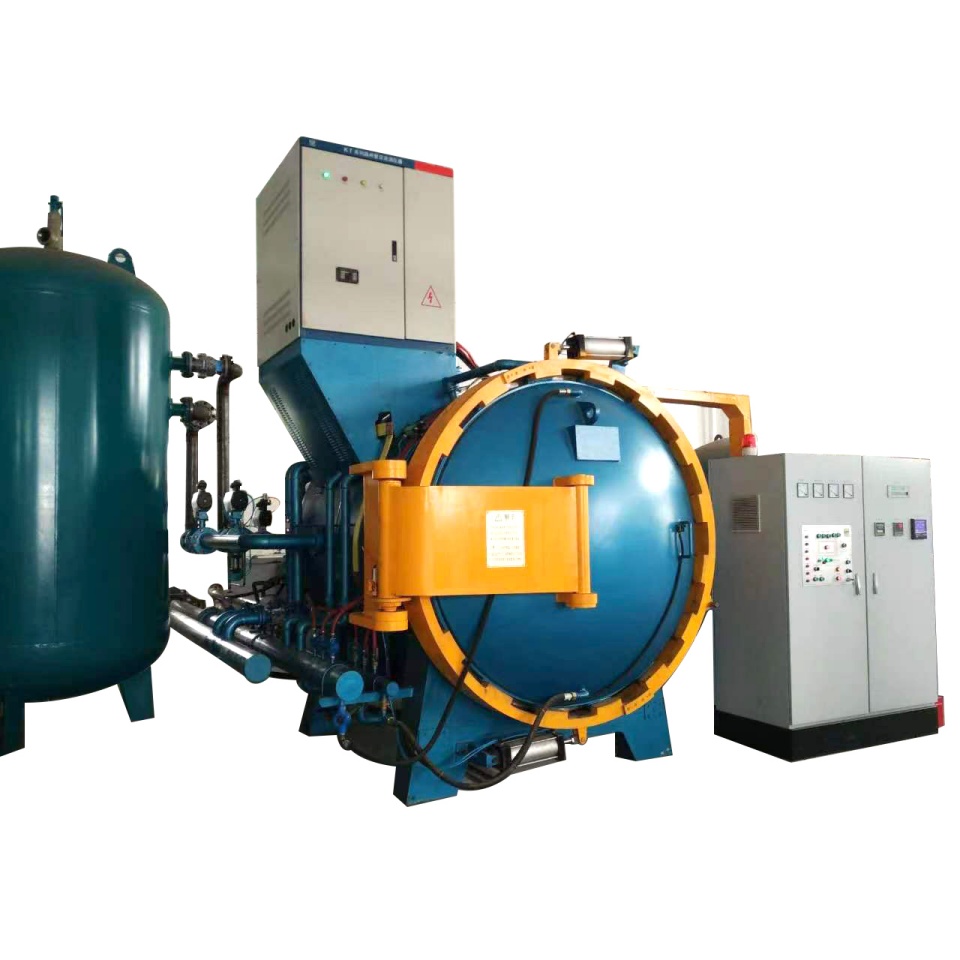
Tool manufacturers face constant pressure to deliver precision components with superior mechanical properties while maintaining cost efficiency and production reliability. The vacuum gas quenching furnace has emerged as the preferred solution for heat treatment operations across the industry, addressing these critical demands through advanced thermal processing technology. This preference is not arbitrary—it stems from measurable advantages in material quality, operational control, and long-term manufacturing economics that directly impact bottom-line performance.
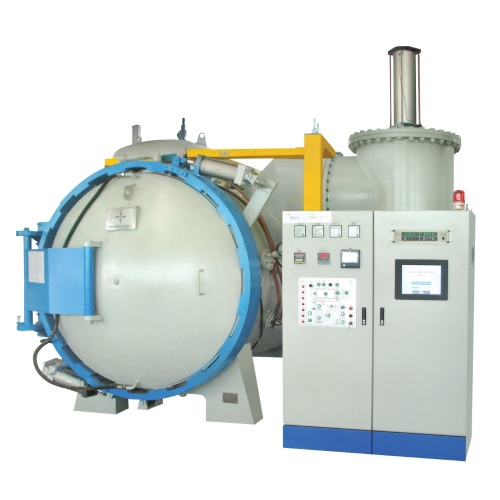
A vacuum gas quenching furnace delivers controlled cooling rates and minimal oxidation, which are essential for achieving consistent material properties in high-performance tool steel and alloy components. Manufacturers who have invested in this technology report dramatic improvements in hardness uniformity, dimensional stability, and reduced distortion compared to conventional air or oil quenching methods. Understanding the specific advantages of a vacuum gas quenching furnace system helps procurement teams and production managers make informed decisions about equipment investment and production strategy.
Superior Material Quality and Mechanical Properties
Reduced Oxidation and Surface Degradation
One of the most compelling reasons manufacturers choose a vacuum gas quenching furnace is its ability to eliminate surface oxidation during the heating and cooling cycle. In conventional quenching processes, components oxidize at high temperatures when exposed to atmospheric oxygen, resulting in scale formation and surface defects that require post-treatment cleaning and grinding. A vacuum gas quenching furnace operates in a controlled inert atmosphere, preventing oxidation entirely and preserving the surface integrity of finished tools and components.
This capability significantly reduces secondary machining operations, labor costs, and material waste. Tools treated in a vacuum gas quenching furnace maintain their precise dimensions and surface finish, eliminating the need for additional finishing steps that would otherwise be required after conventional quenching. For manufacturers producing high-tolerance components or premium cutting tools, this advantage directly translates to reduced per-unit production costs and faster lead times.
Uniform Hardness Distribution
A vacuum gas quenching furnace enables precise control over cooling rates and thermal profiles, resulting in uniform hardness throughout the component cross-section. Conventional air or oil quenching creates variable cooling rates across different component geometries, leading to softer core regions and harder surfaces that may cause premature tool failure or unpredictable performance. The controlled quenching medium and vacuum environment in a vacuum gas quenching furnace ensure consistent hardness distribution regardless of component size or shape.
Manufacturers can specify exact hardness targets and achieve them repeatably across production batches, improving tool life predictability and customer satisfaction. This consistency allows tool engineers to optimize component design with confidence, knowing that the vacuum gas quenching furnace will deliver reliable results batch after batch. For manufacturers serving industries with stringent material specifications, such as aerospace or automotive, this consistency is not just an advantage—it is a compliance requirement.
Operational Efficiency and Process Control
Precise Temperature Management
A vacuum gas quenching furnace provides advanced temperature monitoring and control systems that allow manufacturers to maintain exact thermal profiles throughout the heating, hold, and cooling phases. Digital controllers, thermocouples, and pyrometry systems give operators real-time visibility into chamber conditions, enabling rapid detection of deviations and immediate corrective action. This level of precision prevents batch failures, reduces scrap rates, and ensures that every component meets specification.
Unlike conventional furnaces where temperature uniformity varies significantly across the chamber, a vacuum gas quenching furnace is engineered with optimized heating element placement and circulation design to maintain tight temperature bands. Operators can program multiple thermal profiles and recall them instantly, enabling quick transitions between different material types or component specifications. This flexibility is particularly valuable for tool manufacturers who produce diverse product lines and require agile production scheduling.
Reduced Distortion and Dimensional Stability
The controlled cooling environment inside a vacuum gas quenching furnace minimizes the thermal shock and residual stress that typically cause dimensional distortion in conventional quenching. Inert gas cooling progresses at a measured, predictable rate, allowing internal stresses to equilibrate gradually rather than creating sudden microstructural gradients. Components treated in a vacuum gas quenching furnace maintain their pre-quench dimensions far more reliably than those quenched in oil or water baths.
For manufacturers of precision cutting tools, gauges, or dies, this distortion reduction is transformative. Tools can ship with minimal final grinding, and the predictable dimensional performance means fewer field complaints and warranty claims. A vacuum gas quenching furnace thus reduces not only manufacturing costs but also warranty and customer service expenses that accumulate with dimensional instability.
Long-Term Economic Value and Competitive Advantage
Extended Equipment Lifespan and Reliability
A vacuum gas quenching furnace represents a significant capital investment, but the extended service life and minimal unplanned downtime make it economically superior to frequent replacement cycles with conventional equipment. The inert gas atmosphere protects internal furnace components from oxidation and thermal fatigue, extending the lifespan of heating elements, insulation, and structural materials. Manufacturers report that a well-maintained vacuum gas quenching furnace operates reliably for 15 to 20 years or more, compared to 7 to 10 years for conventional alternatives.
Preventive maintenance on a vacuum gas quenching furnace is more predictable and manageable than reactive repairs on older equipment. Manufacturers can schedule maintenance during planned downtime rather than facing sudden failures that disrupt production. This reliability translates to improved on-time delivery performance, reduced overtime labor, and more consistent cash flow for manufacturing operations.
Enhanced Market Competitiveness
Tool manufacturers who invest in vacuum gas quenching furnace technology gain measurable competitive advantages in product quality, delivery speed, and cost structure. Customers increasingly demand tools with longer service life, tighter tolerances, and consistent performance—requirements that a vacuum gas quenching furnace can reliably deliver. Manufacturers who can demonstrate superior heat treatment capabilities through material certifications and performance data win larger contracts and command premium pricing.
The reputation for precision and reliability that comes from vacuum gas quenching furnace investment opens doors to new customer segments and market opportunities. Manufacturers serving aerospace, medical device, or high-speed machining markets find that a vacuum gas quenching furnace is often a prerequisite for qualification and contractual compliance. This market positioning advantage justifies the equipment investment and drives profitable growth.
FAQ
What is the primary advantage of a vacuum gas quenching furnace over conventional quenching methods?
The primary advantage of a vacuum gas quenching furnace is its ability to deliver uniform cooling in an oxidation-free environment, resulting in superior material properties, minimal distortion, and reduced surface defects. Conventional air or oil quenching cannot match these results because oxygen exposure during heating causes scale formation and cooling rates vary across component geometry, leading to inconsistent hardness and potential tool failure.
How does a vacuum gas quenching furnace reduce manufacturing costs?
A vacuum gas quenching furnace reduces manufacturing costs by eliminating post-quench cleaning and grinding operations, lowering scrap rates through improved batch consistency, minimizing warranty claims due to dimensional stability, and extending equipment service life through reduced oxidative wear. These cumulative savings often exceed the initial capital investment within five to seven years of operation, making the vacuum gas quenching furnace an attractive long-term economic choice.
Which industries benefit most from vacuum gas quenching furnace technology?
Industries that demand precision components with consistent mechanical properties benefit most from a vacuum gas quenching furnace, including aerospace tool manufacturing, automotive component suppliers, medical device producers, precision cutting tool makers, and high-performance gauge manufacturers. Any manufacturer where tool life predictability, dimensional accuracy, or surface finish quality directly impacts end-product performance will find a vacuum gas quenching furnace investment well justified.
