
 EN
EN
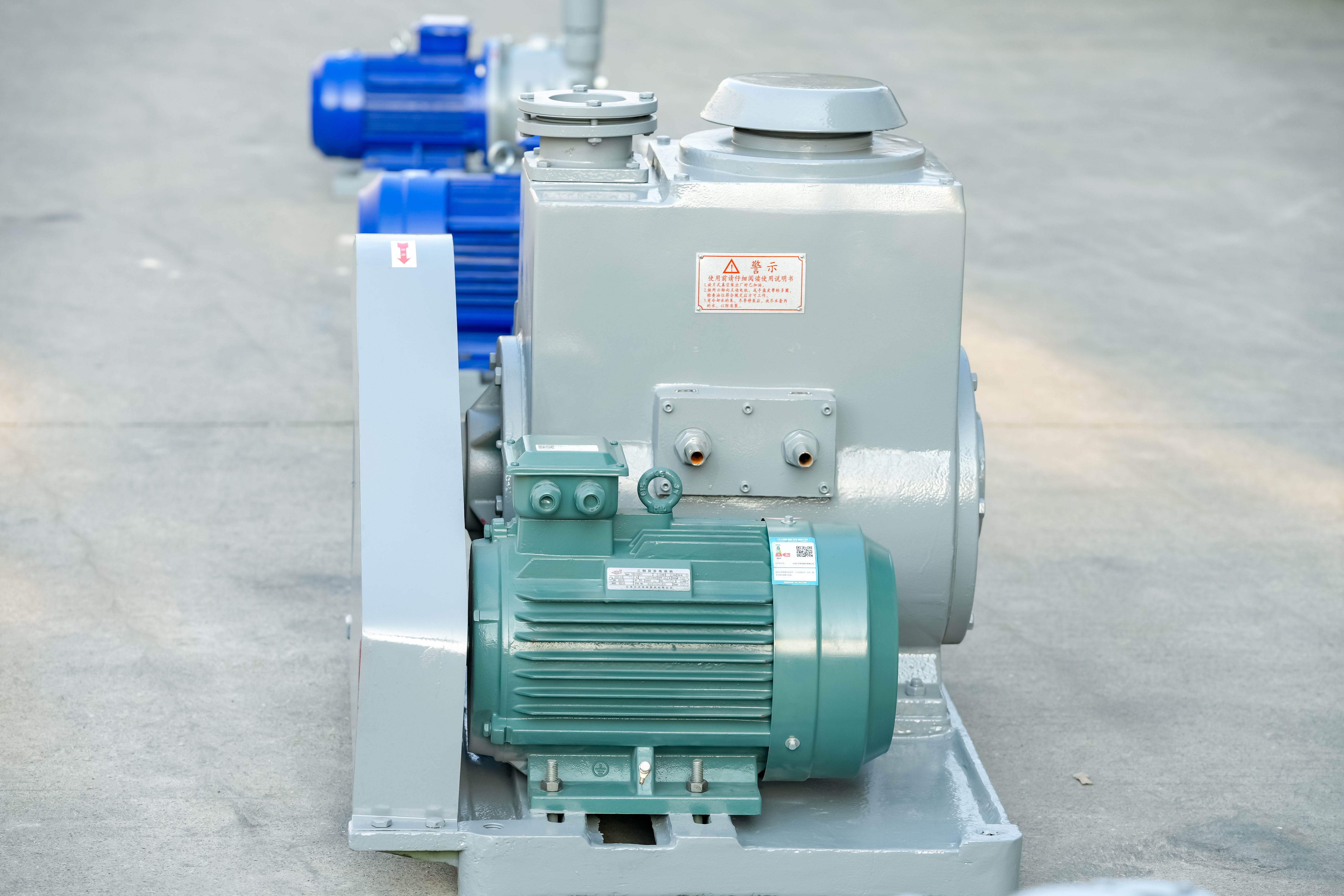
In the world of electronics manufacturing, precision and contamination control are not optional — they are fundamental requirements that determine product quality and yield. A rotary vane vacuum pump plays a critical role in creating and maintaining the low-pressure environments that many electronics processing steps depend upon. From component assembly to thin-film deposition, the ability to reliably evacuate air and moisture from processing chambers makes this type of pump indispensable in modern fabrication facilities.
Understanding exactly how a rotary vane vacuum pump supports electronics processing requires looking at both the mechanical principles behind the technology and the specific demands of semiconductor and electronics fabrication workflows. This article breaks down the key ways these pumps contribute to electronics production, explains what makes them suitable for these applications, and provides practical insight for engineers and procurement professionals selecting vacuum solutions for their facilities.
The Mechanical Principle Behind Rotary Vane Vacuum Pump Operation
How the Vane Mechanism Generates Vacuum
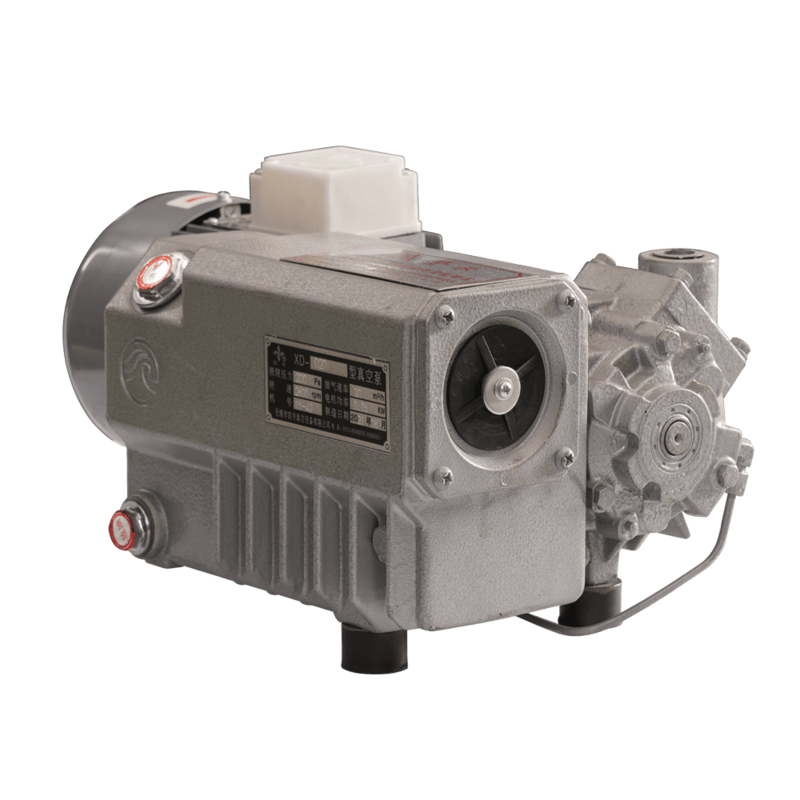
A rotary vane vacuum pump operates by using a rotor that is mounted eccentrically within a cylindrical housing. As the rotor spins, spring-loaded vanes slide outward from slots in the rotor and press against the interior walls of the housing. This creates a series of sealed chambers whose volumes change continuously as the rotor turns. Gas is drawn into the expanding chambers on the inlet side and compressed toward the exhaust side, where it is expelled through an outlet valve.
This positive displacement mechanism allows the rotary vane vacuum pump to achieve deep vacuum levels, often reaching pressures well below atmospheric conditions. In a single-stage design, the pump can typically reach ultimate pressures in the range of a few millibars, while a two-stage design — where the gas passes through two successive compression stages — can reach even lower ultimate pressures. For electronics processing, where even trace amounts of residual gas can interfere with sensitive operations, this deep vacuum capability is highly valuable.
The pumping mechanism is lubricated with oil, which serves multiple purposes: it seals the small gaps between the vanes and the housing wall, reduces friction, and helps cool the pump. However, this oil also introduces a consideration for electronics applications — potential vapor backstreaming — which is why proper trapping and filtration must accompany the rotary vane vacuum pump in sensitive environments.
Single-Stage vs. Two-Stage Configurations in Electronics Use
When selecting a rotary vane vacuum pump for electronics processing, the choice between single-stage and two-stage configurations is significant. A single-stage pump is suitable for applications that require moderate vacuum levels, such as general material handling, basic degassing, or supporting higher-capacity backing systems. These are simpler in design and typically easier to maintain.
A two-stage rotary vane vacuum pump, on the other hand, is far more commonly specified for electronics fabrication because it achieves deeper vacuum by passing gas through two sequential compression stages before expelling it. This design reduces the ultimate pressure achievable and also results in less oil vapor migration toward the process chamber. For operations like sputter coating, chemical vapor deposition, or vacuum baking of printed circuit boards, the two-stage configuration provides the vacuum quality required.
Engineers specifying a rotary vane vacuum pump for their process must carefully evaluate the required ultimate pressure, pumping speed, and gas load to determine whether single-stage or two-stage operation best matches their system requirements. This evaluation is not just a technical exercise — it has a direct impact on process repeatability and product quality in the long run.
Key Electronics Processing Applications That Rely on Rotary Vane Vacuum Pumps
Thin-Film Deposition and Coating Processes
Thin-film deposition processes — including physical vapor deposition (PVD) and chemical vapor deposition (CVD) — are among the most demanding vacuum applications in electronics manufacturing. These processes require controlled low-pressure environments to allow precise deposition of conductive, resistive, or insulating layers onto substrates. A rotary vane vacuum pump is typically used as the roughing pump in these systems, rapidly evacuating the chamber from atmospheric pressure to the operating range before higher-performance turbomolecular or diffusion pumps take over.
The speed at which a rotary vane vacuum pump can evacuate a chamber from atmospheric pressure to its crossover point significantly impacts process throughput. In high-volume production environments, faster chamber roughing means shorter cycle times and more products processed per shift. This is why the pumping speed specification — measured in cubic meters per hour or liters per second — is a primary selection criterion for these applications.
Additionally, the reliability of the rotary vane vacuum pump affects deposition consistency. If a roughing pump fails mid-process, the entire chamber must be vented, the pump serviced, and the process restarted — a costly interruption in any production environment. Robust pump design and regular maintenance schedules are therefore as important as initial performance specifications.
Semiconductor Component Handling and Pick-and-Place
Beyond the deposition chamber, rotary vane vacuum pump technology also supports the physical handling of semiconductor components during assembly. Vacuum pick-and-place systems used in surface mount technology (SMT) lines rely on stable vacuum generation to secure delicate components — including tiny chip capacitors, resistors, and integrated circuits — during placement onto printed circuit boards.
In these applications, the rotary vane vacuum pump provides the base vacuum supply to a distribution system that feeds multiple pick-and-place heads simultaneously. The pump must maintain consistent vacuum pressure without pressure fluctuation, as inconsistency can cause misplacement or dropped components. This makes stable vacuum generation under variable load conditions an important performance characteristic.
Component damage is another concern. Because many modern electronic components are extremely fragile and sensitive to electrostatic discharge, the vacuum system must operate without generating excessive vibration or electrical interference. Well-designed rotary vane vacuum pump units are engineered with low vibration profiles and proper electrical isolation to minimize risks in these sensitive assembly environments.
Vacuum Baking and Outgassing of Electronic Assemblies
Vacuum baking is a critical process step used to remove moisture, solvents, and other volatile contaminants from electronic assemblies and substrates before further processing. This process is especially important for multilayer printed circuit boards, hybrid circuits, and microelectronic packages where trapped moisture can lead to delamination, corrosion, or performance failure in the field.
A rotary vane vacuum pump drives the vacuum oven environment during baking cycles, maintaining the low pressure necessary to allow volatiles to outgas efficiently even at relatively moderate temperatures. The pump must handle the elevated gas load presented by the outgassing materials without significant performance degradation. For this reason, gas ballasting capability — a feature that allows controlled admission of air or nitrogen to prevent oil contamination from condensable vapors — is especially valuable in rotary vane vacuum pump models used for vacuum baking.
Process engineers often specify pumps with large oil reservoirs and efficient oil separation systems for vacuum baking applications, because the high vapor loads can degrade pump oil more quickly than in dry gas applications. Regular oil analysis and scheduled oil changes are standard practices to keep the rotary vane vacuum pump performing reliably in these demanding service conditions.
Performance Factors That Determine Suitability for Electronics Processing
Ultimate Pressure and Pumping Speed Requirements
Two of the most important specifications when evaluating a rotary vane vacuum pump for electronics processing are ultimate pressure and pumping speed. Ultimate pressure defines the lowest pressure the pump can achieve under ideal conditions, while pumping speed describes how quickly it can remove gas from the system being evacuated. Both parameters must be matched carefully to the specific process requirements.
Electronics processes vary widely in their vacuum requirements. Vacuum baking may only require pressures in the range of a few millibars, while thin-film deposition typically needs roughing to lower pressures before secondary pumping stages begin. Selecting a rotary vane vacuum pump with insufficient ultimate pressure for the intended application will result in process failures, while oversizing the pump wastes capital and energy without delivering meaningful improvement.
Pumping speed must be matched to the volume of the process chamber and the acceptable cycle time for chamber evacuation. A pump that is too slow will create production bottlenecks, while one that is properly sized ensures that each chamber reaches operating pressure within the process window. Manufacturers provide pumping speed curves showing performance across the pressure range, and engineers should evaluate these curves at the actual operating pressures relevant to their process, not just at atmospheric intake conditions.
Oil Vapor Management and Contamination Control
Because a rotary vane vacuum pump uses oil lubrication internally, there is an inherent risk of oil vapor migrating backward toward the process chamber — a phenomenon known as backstreaming. In electronics processing, where even nanogram-level contamination can affect device yield and reliability, this risk must be actively managed through the use of cold traps, oil mist filters, and molecular sieve traps positioned between the pump and the chamber.
Modern rotary vane vacuum pump designs have addressed this concern through improved inlet valve geometry, enhanced oil separation within the pump body, and lower-vapor-pressure oils formulated for use in semiconductor-adjacent applications. Some configurations also use anti-suckback valves that prevent oil from being drawn into the vacuum system during power loss events — a particularly important safety feature in electronics environments where a single contamination event can ruin a batch of high-value components.
Facilities that require the highest levels of contamination control often install a foreline trap directly on the inlet of the rotary vane vacuum pump and use Fomblin or other perfluorinated oils that have extremely low vapor pressures. These measures add cost but are justified by the value of the processes being protected and the cost of potential yield loss or equipment damage from contamination events.
Noise, Vibration, and Cleanroom Compatibility
Electronics manufacturing facilities, particularly those classified as cleanrooms, have strict requirements regarding particle generation, noise levels, and vibration. A rotary vane vacuum pump used in or near cleanroom environments must be evaluated for its contribution to these parameters. Excessive vibration can loosen mechanical connections over time and, in extreme cases, can affect the precision of delicate processes or metrology equipment operating nearby.
Most industrial-grade rotary vane vacuum pump models are designed with anti-vibration mounts and balanced rotating assemblies to minimize mechanical vibration transmission to the supporting structure. Noise levels, typically measured in decibels, are also specified by manufacturers, and low-noise models are preferred for environments where personnel work in close proximity to the equipment for extended periods.
Cleanroom-compatible versions of the rotary vane vacuum pump often feature fully enclosed housings with minimal exposed surfaces that could shed particles, along with exhaust connections routed to external environments rather than the cleanroom interior. These design adaptations are important when specifying a pump for ISO-classified cleanroom environments common in semiconductor and advanced electronics production.
Maintenance Practices That Preserve Performance in Electronics Facilities
Oil Maintenance and Contamination Monitoring
The oil in a rotary vane vacuum pump is not merely a lubricant — it is an active part of the vacuum sealing mechanism. Degraded, contaminated, or depleted oil directly impacts the pump's ability to achieve and maintain deep vacuum levels. For electronics processing applications, where process consistency is critical, maintaining pump oil in good condition is not optional preventive maintenance — it is a process control requirement.
Oil change intervals should be established based on actual operating conditions, including gas load, condensable vapor content, and operating temperature, rather than simply following a fixed calendar schedule. Many facilities that use rotary vane vacuum pump systems in high-gas-load applications implement oil analysis programs to monitor acid number, water content, and particulate levels, enabling data-driven maintenance decisions that prevent both premature oil changes and running degraded oil that compromises process quality.
Oil filters and mist separators should be inspected and replaced as part of any comprehensive rotary vane vacuum pump maintenance program. A clogged oil mist separator restricts exhaust flow, raising internal pressure and reducing pump performance. In high-throughput electronics facilities, pump downtime for maintenance should be planned during scheduled production breaks to minimize process impact.
Vane Inspection and Mechanical Servicing
The vanes themselves are wear components in any rotary vane vacuum pump. Over time, repeated contact with the housing wall causes gradual wear that reduces the effective sealing of the gas chambers. As vane wear progresses, the pump loses its ability to achieve deep vacuum, and ultimate pressure performance degrades. Regular inspection of vane condition is therefore a key part of maintaining pump performance in electronics processing service.
Vane wear rates are influenced by operating conditions including pump speed, oil viscosity, gas load, and whether the pump handles any corrosive or abrasive process gases. In electronics applications where reactive gases such as fluorine compounds may occasionally be handled, vane materials must be selected for chemical compatibility, and inspection intervals should be shortened accordingly.
When a rotary vane vacuum pump is disassembled for vane replacement or general overhaul, the opportunity should be taken to inspect the rotor, housing bore, bearings, and shaft seal. Catching developing mechanical issues during a planned overhaul is far less costly than responding to an unplanned failure during production. Establishing clear service records for each pump unit also enables trend analysis that can predict when the next overhaul is likely to be needed.
FAQ
What makes a rotary vane vacuum pump suitable for electronics processing compared to other pump types?
A rotary vane vacuum pump offers a practical combination of deep vacuum capability, high pumping speed, and mechanical reliability that suits a wide range of electronics processing steps. Compared to dry pumps, oil-sealed rotary vane models can achieve lower ultimate pressures at a lower equipment cost. Compared to diaphragm pumps, they handle much higher gas volumes and reach deeper vacuum levels. This versatility, combined with mature technology and straightforward maintenance requirements, makes the rotary vane vacuum pump a widely adopted choice in electronics fabrication facilities worldwide.
How does oil contamination from a rotary vane vacuum pump affect semiconductor processes?
Oil vapor backstreaming from a rotary vane vacuum pump can deposit hydrocarbon films on process chamber walls and substrates, causing adhesion failures, electrical leakage, or surface contamination that degrades device performance and yield. To prevent this, proper foreline traps, cold traps, and high-quality low-vapor-pressure pump oils should be used. Routine maintenance to ensure the inlet anti-suckback valve is functioning correctly also protects the process chamber in the event of power interruption or pump shutdown.
Can a rotary vane vacuum pump handle reactive gases used in electronics manufacturing?
Standard rotary vane vacuum pump designs are not intended for continuous exposure to highly reactive or corrosive gases such as those encountered in certain etch or CVD processes. However, chemically resistant variants exist that feature corrosion-resistant materials in the pump internals, specialized vane compounds, and compatible oils designed for exposure to mildly reactive gases. For processes involving strong oxidizers or aggressive fluorine-based chemistries, additional gas scrubbing systems should be installed upstream of the pump to neutralize reactive species before they enter the pump body.
How often should a rotary vane vacuum pump be serviced in an electronics facility?
Service intervals for a rotary vane vacuum pump in electronics processing depend on the specific application, gas load, and operating hours. As a general guideline, oil changes are typically performed every 500 to 2000 operating hours, while comprehensive mechanical inspections including vane checks are performed annually or at defined hour thresholds. Facilities running the pump continuously in high-vapor-load applications should use shorter intervals and implement oil condition monitoring to identify when oil quality has degraded beyond acceptable limits before the scheduled change date.
Table of Contents
- The Mechanical Principle Behind Rotary Vane Vacuum Pump Operation
- Key Electronics Processing Applications That Rely on Rotary Vane Vacuum Pumps
- Performance Factors That Determine Suitability for Electronics Processing
- Maintenance Practices That Preserve Performance in Electronics Facilities
-
FAQ
- What makes a rotary vane vacuum pump suitable for electronics processing compared to other pump types?
- How does oil contamination from a rotary vane vacuum pump affect semiconductor processes?
- Can a rotary vane vacuum pump handle reactive gases used in electronics manufacturing?
- How often should a rotary vane vacuum pump be serviced in an electronics facility?
