
 EN
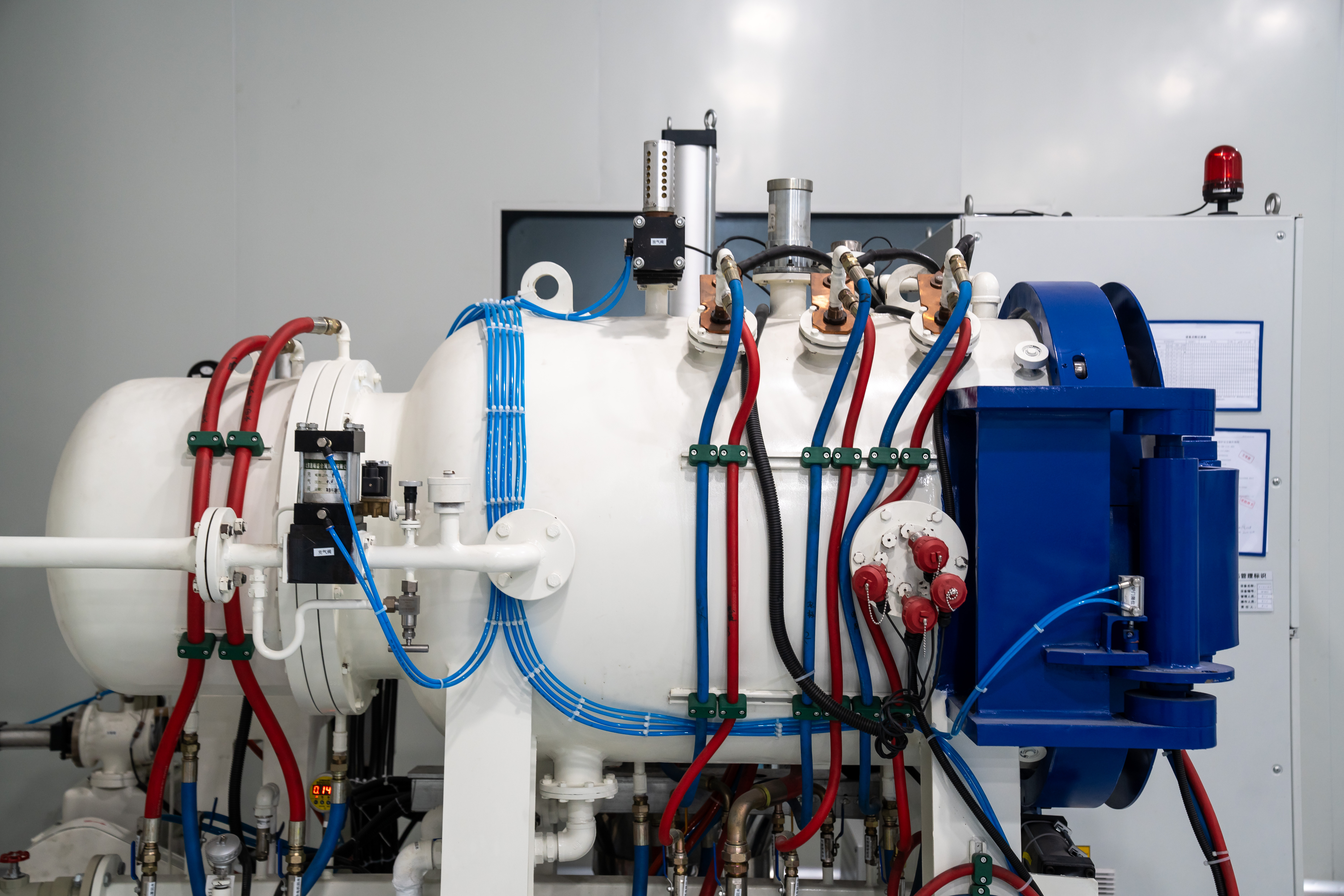
Part distortion represents one of the most significant challenges in precision manufacturing and heat treatment processes. When components undergo hardening and cooling, uneven stress distribution and thermal gradients can cause warping, bending, and dimensional shifts that compromise functionality and require costly rework or scrap. A vacuum gas quenching furnace addresses this critical problem by delivering controlled, uniform cooling that dramatically reduces distortion while maintaining the metallurgical benefits of proper hardening.
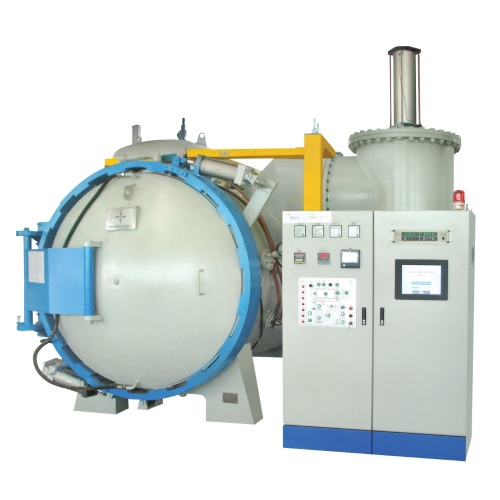
The vacuum gas quenching furnace operates on a fundamentally different principle than traditional oil or water quenching methods. By combining a controlled vacuum environment with precisely calibrated inert gas cooling, this technology minimizes oxidation, eliminates fluid contamination, and enables rapid yet uniform temperature reduction across the entire part volume. Understanding how a vacuum gas quenching furnace works and why it reduces distortion is essential for manufacturers seeking to improve quality metrics, reduce scrap rates, and enhance product reliability in demanding applications.
How Controlled Cooling Minimizes Distortion
Uniform Temperature Distribution in Vacuum Gas Quenching Furnace Operations
The vacuum gas quenching furnace creates a controlled thermal environment that distributes cooling uniformly across all surfaces and internal sections of a workpiece. Unlike immersion quenching, where fluid contact can be inconsistent due to part geometry and fluid circulation patterns, a vacuum gas quenching furnace uses pressurized inert gas that flows around and through complex shapes with predictable consistency. This uniform cooling directly reduces thermal gradients, which are the primary driver of residual stress buildup and subsequent distortion during the hardening cycle.
Stress Reduction Through Equilibrium Cooling
A vacuum gas quenching furnace operates at controlled pressures and gas velocities, allowing engineers to dial in cooling rates that match the specific heat transfer requirements of each alloy and part geometry. Slower, more predictable cooling through a vacuum gas quenching furnace reduces the severity of phase transformation stresses compared to violent quenching in oil or water. This equilibrium cooling mechanism means that transformation stresses are distributed more evenly throughout the part volume, preventing the localized stress concentrations that typically cause warping, cracking, and dimensional shift in conventional heat treatment processes.
Vacuum Gas Quenching Furnace Technology and Atmospheric Control
Elimination of Oxidation and Surface Degradation
A vacuum gas quenching furnace maintains a low-oxygen environment during both heating and cooling phases, which prevents surface oxidation and decarburization that would otherwise complicate subsequent processing and reduce fatigue life. The inert gas used in a vacuum gas quenching furnace, typically nitrogen or argon, creates a protective atmosphere that ensures consistent surface chemistry across all exposed areas. This atmospheric control not only improves surface quality and eliminates the need for additional cleaning steps but also contributes to more uniform material properties that resist distortion better than parts treated in conventional environments.
Precise Pressure and Gas Flow Management
Modern vacuum gas quenching furnace systems feature programmable controls that adjust gas pressure and flow velocity during the cooling sequence to match each phase of the transformation process. During the initial rapid cooling phase, higher pressure and flow rate accelerate heat removal from the surface while the vacuum gas quenching furnace maintains controlled conditions to prevent excessive thermal shock. As the part cools and internal regions approach the critical transformation zone, the vacuum gas quenching furnace can reduce gas velocity to allow more gradual cooling and stress relief, creating a tailored thermal profile that minimizes distortion for the specific material and geometry being treated.
Industrial Benefits of Reduced Distortion with Vacuum Gas Quenching Furnace Systems
Dimensional Accuracy and Tighter Tolerances
Parts processed in a vacuum gas quenching furnace exhibit significantly lower post-treatment dimensional variation compared to conventional quenching methods, allowing manufacturers to hold tighter tolerances without secondary finishing operations. When a vacuum gas quenching furnace reduces distortion from 0.005 inches to 0.001 inches or less on critical features, the downstream impact includes reduced grinding, honing, and secondary machining costs. For precision bearing races, gear teeth, and hydraulic component bores, the dimensional stability delivered by a vacuum gas quenching furnace translates directly into improved assembly fit, reduced scrap, and enhanced product performance in service.
Extended Tool Life and Reduced Rework Cycles
When parts remain dimensionally closer to specification after heat treatment, tool life increases because grinding and finishing operations encounter less material variation and excessive stock removal. A vacuum gas quenching furnace dramatically reduces the rework rate associated with out-of-tolerance distortion, freeing capacity for productive work and accelerating throughput. Manufacturers using a vacuum gas quenching furnace report cycle time reductions of 15 to 30 percent because fewer parts require correction cycles and because the vacuum gas quenching furnace enables scheduling efficiency without the unpredictable scrap and rework delays inherent in traditional quenching approaches.
Material Performance and Mechanical Property Consistency
A vacuum gas quenching furnace delivers hardness patterns and core properties that are remarkably consistent from part to part and batch to batch because the controlled cooling environment eliminates the thermal chaos that causes hardness banding and soft spots in conventionally quenched parts. This consistency means that fatigue strength, impact resistance, and wear performance become predictable and measurable, allowing engineers to design with confidence and avoid over-specification. Components hardened in a vacuum gas quenching furnace experience fewer early failures in field service, reducing warranty claims and enhancing brand reputation in competitive markets where reliability is a primary differentiator.
FAQ
How much distortion reduction can a vacuum gas quenching furnace typically achieve compared to oil quenching?
A vacuum gas quenching furnace typically reduces distortion by 60 to 80 percent compared to conventional oil quenching, depending on part geometry, alloy type, and section size. For complex or thin-walled components, the reduction can exceed 85 percent because the vacuum gas quenching furnace delivers more uniform cooling that prevents the localized hard spots and stress concentration zones common in oil-quenched parts. Exact distortion reduction depends on specific process parameters and material characteristics, making prototype trials with a vacuum gas quenching furnace essential to quantify expected improvements for your particular application.
Are all steel alloys suitable for processing in a vacuum gas quenching furnace?
Most alloy steels used in aerospace, automotive, and precision manufacturing applications are well-suited to a vacuum gas quenching furnace, including tool steels, case-hardening steels, and stainless grades. However, alloys with strong decarburization sensitivity or those requiring extremely rapid cooling rates may need process optimization when transitioning from oil quenching to a vacuum gas quenching furnace. Your heat treatment partner should evaluate your specific alloy and geometry to confirm that a vacuum gas quenching furnace parameters can meet hardness and mechanical property targets while delivering the distortion reduction benefits you seek.
What is the typical cost impact of using a vacuum gas quenching furnace versus traditional quenching methods?
While a vacuum gas quenching furnace has higher capital cost than oil quenching equipment, the return on investment typically comes from reduced scrap, lower rework rates, reduced secondary finishing labor, and improved first-pass throughput. For high-precision components where distortion rejection rates are currently 5 to 15 percent, a vacuum gas quenching furnace can pay for itself within 2 to 4 years through scrap and rework elimination alone. The economic justification for a vacuum gas quenching furnace strengthens as production volumes increase, as design margins tighten, and as customer quality expectations rise beyond what conventional quenching can reliably deliver.
